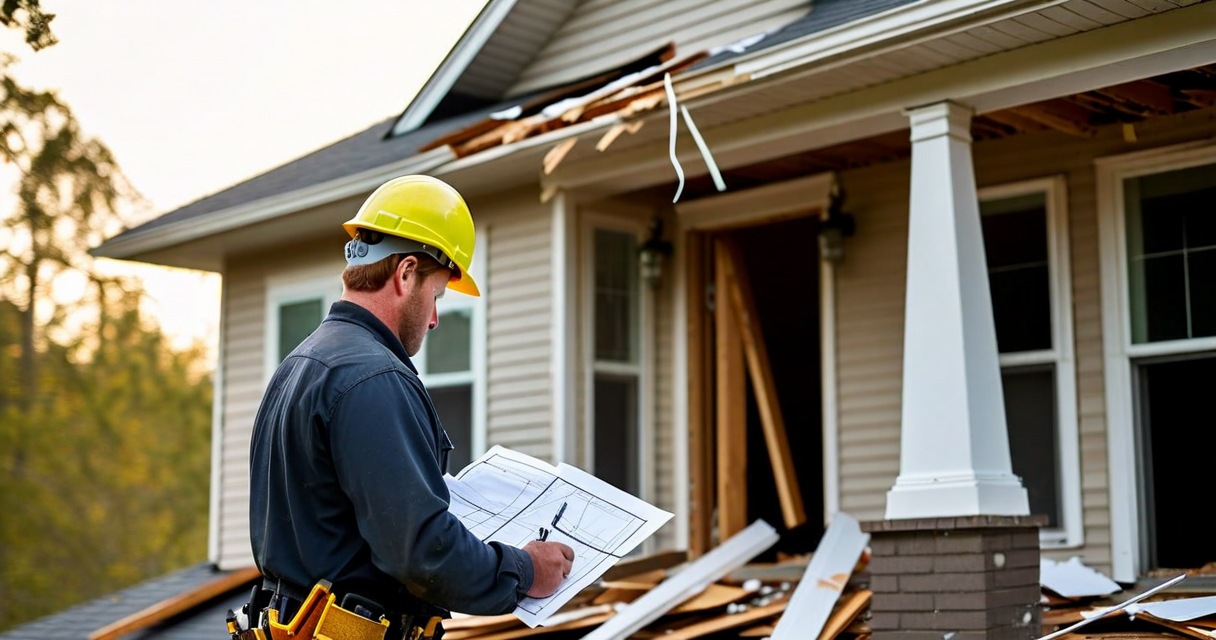
Within 48 hours of a major disaster declaration, trucks with out-of-state plates start appearing in affected neighborhoods. Some are legitimate contractors who follow disaster work professionally and do excellent work. Others are opportunists — unlicensed, uninsured, carrying a contract that assigns your insurance benefits directly to them before work starts.
The industry term is "storm chasers." After Hurricane Harvey, Texas Attorney General Ken Paxton's office received over 1,100 contractor fraud complaints in the first six months. After the 2021 Marshall Fire in Colorado — Bright Harbor's home state — the Colorado Division of Insurance opened investigations into more than 70 contractors within a year of the fire.
Four checks. Fifteen minutes. They catch roughly 80% of the red flags before you sign anything.
Check One: State License Verification
Every state that requires contractor licensing has a public lookup tool. In Colorado, it's the Department of Regulatory Agencies (DORA) online portal. In California, it's the CSLB (Contractors State License Board) at cslb.ca.gov. In Florida, it's DBPR at myfloridalicense.com.
Type in the contractor's name or license number and verify three things: the license is active (not expired or suspended), the license category matches the work they're proposing (a roofing license doesn't cover foundation work), and the license is held in the name of the individual or company you're dealing with — not a different entity.
If the contractor says their license is "pending" or gives you a number that doesn't match the lookup, stop there. No licensed contractor has any reason to hesitate on this check.
Check Two: Insurance Certificate
Ask for a Certificate of Insurance before any work begins. The certificate should show general liability coverage (minimum $1M per occurrence) and workers' compensation coverage for all employees. The certificate should list your name and address as the certificate holder — this is standard practice and costs the contractor nothing.
Call the insurance company directly to verify the certificate is current. This sounds excessive but takes three minutes. Insurance fraud in the contractor industry often involves presenting a real certificate from a real company but from a policy that has since been cancelled. The carrier's certificate verification line will tell you in 60 seconds if the policy is active.
Why this matters: if a worker is injured on your property and the contractor doesn't have workers' comp, you may be liable. If the contractor damages a neighboring property and has no liability coverage, you may be named in the resulting claim. Neither scenario is hypothetical — both occur regularly after major disasters when unlicensed crews are working rushed jobs.
Check Three: Complaint History
The Better Business Bureau isn't the only — or even the best — place to check complaint history after a disaster. State Attorney General consumer protection databases are often more comprehensive for contractor complaints. Search "contractor complaint" plus your state name to find the relevant portal.
Also check the contractor's license lookup result — in most states, formal complaints and disciplinary actions are attached to the license record. A contractor with two unresolved complaints in the last 18 months is a different story than one with a decades-old resolved complaint.
One specific red flag: if the contractor just registered in your state, confirm when. Registration in the week or two after a disaster declaration is a sign of a storm chaser who set up a local entity specifically to work in your area. That doesn't automatically make them fraudulent, but it means they have no local reputation to protect.
Check Four: The Contract Language
Before you sign anything, look for these specific phrases and know what they mean.
"Assignment of Benefits" (AOB) — This clause transfers your right to receive insurance benefits directly to the contractor. Once you sign an AOB, the contractor can negotiate directly with your insurer, often leading to inflated invoices and disputes that take months to resolve. In some states, AOB abuse is so prevalent that Florida passed the Assignments of Benefits Reform Act in 2019 specifically to curb it. Read every contract for this phrase before signing.
Large upfront deposit requirements — Legitimate contractors typically ask for 10-30% upfront on residential projects. Any request for more than 50% upfront, or for the full amount before work begins, is a red flag. "Storm chasers collect as much upfront as possible because they intend to do the minimum or disappear" is a phrase we've heard from Colorado's Division of Insurance investigators more than once.
No written itemized scope of work — "Repair all storm damage, price to be determined" is not a contract. Every legitimate rebuild contract should itemize the specific work to be done, materials to be used (brand, grade, quantity), permit requirements, and the schedule. Vague scopes leave you with no recourse when the work is incomplete.
What to Do If You've Already Signed
Most states have a right of rescission on home improvement contracts — typically 3 business days from signing. If you've signed within that window and have concerns, you can cancel in writing and the contractor is legally required to return any deposits not yet used for materials or labor.
If the right of rescission has passed, your options narrow. Document everything: take photos of all work done (and not done), keep all communication with the contractor in writing, and save every invoice and receipt. If the contractor disappears with your deposit, your state AG's consumer protection division and your homeowner's insurance policy (which may have fraud coverage) are your primary recourse options.
At Bright Harbor, contractor verification is a standard part of how we support clients. We check licenses, call insurers directly, and review bid scopes before our clients sign anything. It's about 90 minutes of work that has saved our clients an average of $12,000 per incident where we've identified a problematic contractor before work began.
Building Your Contractor Shortlist Before the Next Disaster
The best time to vet contractors is before you need them urgently. After a disaster, you're making decisions under stress and time pressure. A local contractor who has worked in your neighborhood for years, whose license you've already verified, and who comes recommended by a neighbor is worth far more than the highest-bidding stranger who appeared after the storm.
Keep a short list: one licensed roofer, one general contractor, one plumber, one electrician — all local, all verified. Ask your neighbors who they've used. Ask at your local hardware store. The relationships exist in every community. The people who've been burned hired strangers.
If you're in the middle of a disaster recovery and about to sign a contractor agreement, reach out before you do: help@brightharbor.us. We can review the contract and flag any issues within 24 hours.