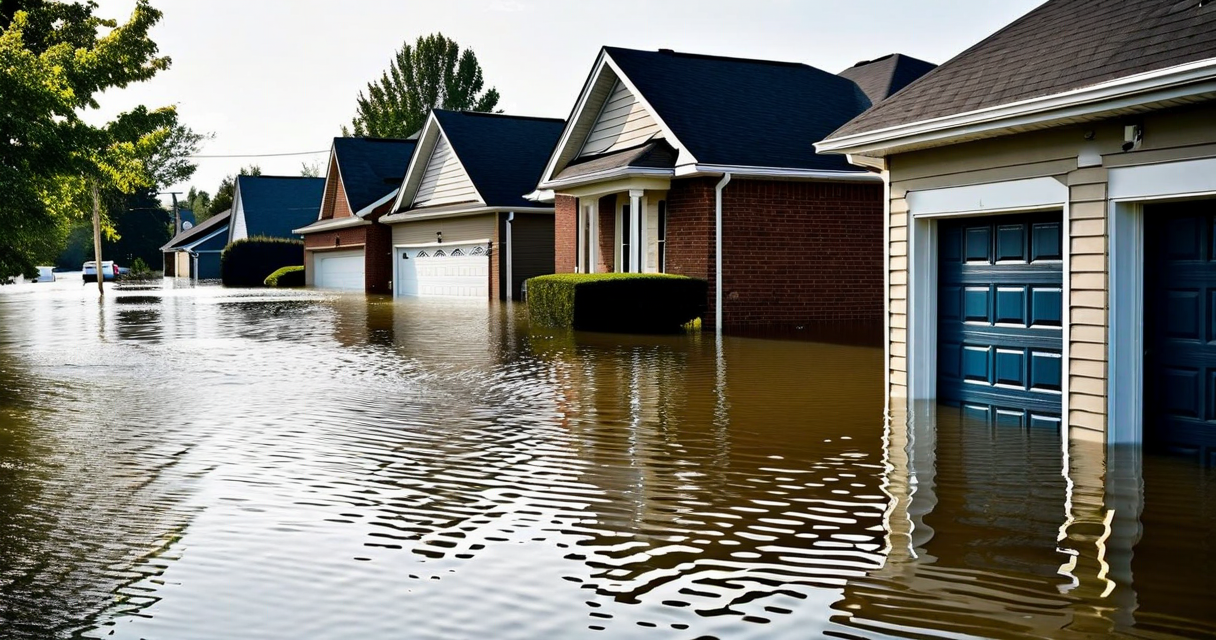
Every year, thousands of homeowners discover mid-claim that their standard insurance policy does not cover the most common cause of property damage in the United States. Flood damage is explicitly excluded from virtually every homeowners policy sold in America. Understanding this distinction before a storm — not during the recovery — is the difference between a manageable crisis and a financial catastrophe.
The Standard Homeowners Policy: What It Covers and What It Doesn't
A standard homeowners policy (HO-3 is the most common form) covers damage from named perils: fire, lightning, wind, hail, vandalism, theft, and several others. It also provides open-perils coverage for the dwelling structure, meaning it covers all causes of damage except those specifically excluded.
The flood exclusion is among the most significant of those carve-outs. The policy language typically reads something like: "We do not insure for loss caused directly or indirectly by... flood, surface water, waves, tidal water, overflow of a body of water, or spray from any of these, whether or not driven by wind." That last clause — "whether or not driven by wind" — matters enormously during hurricanes. Water driven inland by hurricane winds is still flood damage, not wind damage, under most policy language.
What homeowners policies do cover in storm events: wind damage to the structure (roof, walls, windows), rain damage that enters through wind-created openings, and water damage caused by a burst pipe or appliance failure. The line between "flood" and "wind-driven rain" is heavily contested in post-hurricane claims and is the single most litigated insurance coverage question in coastal states.
NFIP: The National Flood Insurance Program
The National Flood Insurance Program, administered by FEMA, is the primary source of flood coverage in the US. Over 4.7 million policies are in force as of 2024. NFIP policies are sold and serviced by private insurance agents but backed by the federal government — which is why they are called "Write Your Own" policies even though they're underwritten federally.
NFIP coverage limits are capped: $250,000 for the building structure and $100,000 for contents. These caps have not increased substantially since 1994 and represent a significant gap for homeowners in high-cost housing markets. A home worth $600,000 in a Colorado flood zone may carry $250,000 in NFIP coverage — enough to address structural damage but not a total-loss replacement scenario.
NFIP policies also have a 30-day waiting period from purchase to activation for most coverage types. This means buying flood insurance the day a storm is forecast does nothing. The exception: loans closing that require flood insurance, or policies purchased in connection with a community's entry into the NFIP program. Planning ahead is the only strategy that works.
What NFIP Does and Does Not Cover
NFIP building coverage: the physical structure, foundation, electrical and plumbing systems, HVAC equipment, water heaters, installed appliances (permanently installed), flooring, paneling, cabinets, and window blinds. Detached garages receive limited coverage (10% of building coverage limit).
NFIP contents coverage: clothing, furniture, electronics, curtains, portable appliances, carpets not covered under building coverage, and valuables up to $2,500 (jewelry, furs, art). Contents coverage must be purchased separately — it does not come automatically with building coverage.
What NFIP does not cover: additional living expenses (ALE) while displaced, landscaping, swimming pools, patios and decks, fences, financial losses, currency and valuable papers, cars (covered under comprehensive auto insurance), and in-ground pools. This last gap — no ALE coverage — is perhaps the most painful surprise for families who spend months in hotels after a flood and receive no reimbursement for that cost through their flood policy.
Private Flood Insurance: The Alternative Worth Understanding
Since 2019, the private flood insurance market has expanded significantly. Carriers including Neptune Flood, Palomar Specialty, Hiscox, and Lloyd's syndicates offer flood policies that often exceed NFIP coverage limits, include ALE coverage, and can be underwritten faster than NFIP policies in some circumstances.
Private policies can be less expensive than NFIP in some flood zones — particularly lower-risk zones where actuarial data supports competitive pricing — and more expensive in high-risk areas. The critical question when comparing private to NFIP is whether the private policy satisfies your lender's flood insurance requirement if your property is in a Special Flood Hazard Area (SFHA). Most do, but confirm with your mortgage servicer before switching.
The private market also offers excess flood policies — secondary coverage that kicks in after NFIP limits are exhausted. For homeowners with properties valued above $250,000, an excess flood policy is often the most cost-effective way to close the coverage gap without replacing the NFIP policy entirely.
The Wind/Water Dispute: What Happens After a Hurricane
When a hurricane hits a home, two things happen simultaneously: wind damages the structure, and water intrudes and floods the interior. Your homeowners policy covers the wind damage. Your flood policy covers the water damage. Determining how much of the total damage was caused by each peril is a deeply contested process that generates enormous litigation in the aftermath of every major hurricane.
Insurers have a financial incentive to attribute as much damage as possible to the flood peril — because the homeowners policy (which they underwrite) pays less when more is classified as flood (covered by NFIP or a separate policy). Homeowners have the opposite incentive. After Hurricane Katrina, hundreds of thousands of wind/water disputes dragged through courts and arbitration for years.
When you are filing a post-hurricane claim, document everything with dated photographs before any cleanup begins. The sequence of damage matters — evidence of wind damage to the roof or walls before water entry supports a wind claim. Hire a structural engineer if the total disputed amount justifies it. The engineer's report on cause of damage carries more weight with adjusters and in appraisal proceedings than contractor opinions.
Checking Your Flood Zone Status
FEMA's Flood Map Service Center (msc.fema.gov) allows any homeowner to enter their address and view the official Flood Insurance Rate Map for their property. Properties in Zone AE, AO, AH, or VE are in Special Flood Hazard Areas and federally backed mortgage holders are required to carry flood insurance. Properties in Zone X (shaded) or Zone B carry moderate risk. Unshaded Zone X and Zone C carry minimal mapped risk — but "minimal mapped" does not mean "no risk."
Flood maps are updated periodically, and properties can move in or out of high-risk zones when new hydrological data becomes available. If your property recently moved into a higher-risk zone, you may be eligible for a Preferred Risk Policy at lower rates during a transition period. If it moved out of a high-risk zone, you may be able to remove the mandatory flood insurance requirement from your mortgage — but you should evaluate whether retaining coverage still makes sense given your actual risk profile.
Climate change is shifting flood risk in ways that official maps have not fully captured. Properties in low-risk zones that were flooded repeatedly during the 2010s are seeing higher private flood insurance quotes — which is itself a useful risk signal even if the FEMA map has not been updated.
Filing a Flood Claim: What the Process Looks Like
Report the loss to your NFIP agent as soon as possible after a flood. The claims process under NFIP requires you to submit a Proof of Loss (a signed, sworn statement of the amount you claim) within 60 days of the loss. Missing this deadline is a policy requirement, not an insurance company preference, and missing it gives the insurer grounds to deny your claim outright.
An NFIP adjuster will inspect the damage and prepare a scope of loss. Unlike some private carriers, NFIP does not use photo-only inspections — a field adjuster should physically visit your property. If the adjuster's scope misses damage, you have the right to request a re-inspection or supplement the scope with contractor estimates.
If you disagree with the NFIP settlement offer, the dispute process is different from private insurance. NFIP disputes go through FEMA's appeals process, then potentially to the U.S. District Court under the Federal Flood Insurance statute — not state insurance arbitration. This legal framework limits some of the options available through private carrier disputes, so understanding it before you take a position is important.
Preparing Your Coverage Review Before the Next Storm Season
Read both your homeowners declaration page and your flood policy (if you have one) side by side. Note the specific coverage limits, deductibles, and exclusion language. Calculate whether the combined payout in a worst-case scenario would actually cover your home's replacement cost and your living expenses during displacement.
Check whether your homeowners policy includes an Extended Replacement Cost endorsement. Standard Replacement Cost coverage pays to rebuild your home to pre-loss condition at current material prices. Extended Replacement Cost adds a buffer — typically 25–50% above your dwelling coverage limit — to account for cost spikes that follow major disasters when contractor and material prices surge due to demand.
Create a home inventory. Photograph every room, open every cabinet, record serial numbers on appliances and electronics. Store this documentation offsite — cloud backup or a secure email to yourself. A complete inventory is the single most valuable thing you can do before a disaster, and the hardest thing to recreate after one.
Act Before a Storm, Not After
Coverage gaps are fixable before a disaster and largely irreversible after one. If you have not checked whether you have flood coverage — separate from your homeowners policy — do it today. The 30-day NFIP waiting period means the window to act closes the moment a storm is forecast. At Bright Harbor, we help clients review their full coverage picture and identify gaps before they become claim disputes. Reach out to help@brightharbor.us if you would like a policy review consultation.