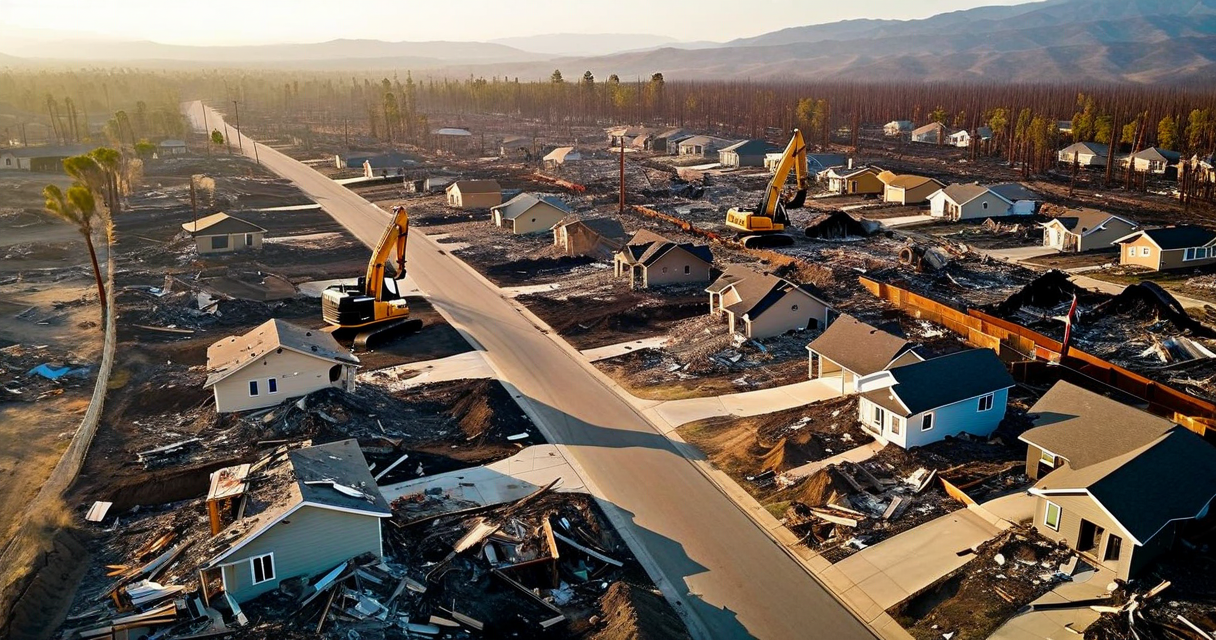
Wildfire recovery takes longer than most survivors expect. The average total claim resolution time for a total-loss wildfire claim is 18-24 months, with significant variation based on insurer responsiveness, regional construction capacity, and how aggressively the homeowner manages the process.
This timeline walks through what typically happens, when to expect it, and where the critical inflection points are. Most claim problems are predictable — they occur at the same places in the process for the same reasons. Knowing where they are gives you time to prevent them.
Days 1–7: The Acute Phase
Your first priority in the initial week is safety and basic stabilization — evacuation compliance, locating family members, securing immediate shelter. Insurance documentation begins simultaneously.
File your claim as quickly as possible. Most major insurers have 24/7 claims lines and mobile apps. Your claim number activates the adjuster assignment process. The sooner the file is open, the sooner the adjuster is assigned, the sooner your ALE clock is formally running.
If you can safely photograph your property before leaving and before anything is disturbed, do it. Timestamped photos from day one are significantly more valuable than photos taken later when cleanup has already begun.
Weeks 2–4: Adjuster Assignment and First Inspection
Most insurers are contractually required to contact you within 10-15 days of filing a claim. After a major wildfire event, this timeline often stretches to 30 days because adjuster capacity is overwhelmed. California's insurance code requires contact within 15 days; most other states have similar requirements though enforcement varies.
The first inspection is a site visit to document damage. You should be present, have your own contractor present if possible, and photograph everything the adjuster photographs. Ask for a copy of the inspection report immediately after it's completed — you're entitled to it, and it will be the foundation for the initial estimate.
For total-loss wildfire claims, many states have specific provisions. California, for example, requires insurers to offer a partial advance on Contents (Coverage C) equal to 25-30% of the limit without requiring an itemized list at this stage. This advance can be critical for families who lost everything and need immediate funds.
Month 2–3: Initial Estimate and First Dispute
The adjuster submits an initial estimate — a line-item breakdown of what the insurer will pay to rebuild the structure. This number, in our experience, is almost always below actual rebuild cost. The estimate uses a software tool called Xactimate, which prices repair items based on regional labor and material databases. The databases are updated periodically but often lag real market conditions.
After the Marshall Fire in Colorado, Xactimate pricing for lumber and labor ran approximately 25-35% below what contractors were actually charging in the region. This gap is common after major regional disasters when demand spikes. Your contractor's actual bids are often your strongest counter-evidence to an Xactimate-based estimate.
Get three contractor bids. If all three are above the insurer's estimate, you have grounds for a supplement. A supplement request formally asks the insurer to increase the estimate to reflect actual costs. Most insurers expect supplement requests on major claims — the first estimate is a starting point, not a final offer.
Month 3–6: Contents Inventory
The personal property (Coverage C) claim is separate from the structure claim and has its own timeline. You must submit a proof of loss — an itemized inventory of everything you lost — with descriptions, approximate quantities, ages, and estimated replacement costs. This is one of the most time-consuming parts of any total-loss claim.
State law governs the deadline for submitting proof of loss — often 60-180 days from the date of loss. Missing this deadline can void your Coverage C claim entirely. If you need more time to complete the inventory, most insurers will grant extensions in writing if you request them before the deadline.
Use the room-by-room method: start with the rooms you remember most clearly and work systematically. Bank records, Amazon purchase history, credit card statements, and home video walkthroughs (if you have old footage) are all legitimate documentation sources.
Month 6–12: Rebuild Planning and Permit Delays
Once structure and contents claims are advancing, the rebuild itself begins. After major wildfire events, local permit offices are often backlogged by 6-18 months. Boulder County after the Marshall Fire saw permit wait times of 8-12 months for reconstruction projects in some zones.
Permit delays affect your ALE timeline. If your policy's ALE coverage has a 12-month limit and your permit takes 8 months to issue, you may be approaching your ALE limit before construction even starts. This is a known problem after major regional disasters, and many states have issued guidance requiring insurer ALE extensions under these circumstances.
Document permit application dates and any official correspondence from the building department. These records support an ALE extension request to your insurer and establish that delays are beyond your control.
Month 12–24: Rebuild Completion and Final Payment
The final holdback — the depreciation amount withheld under an RCV policy — is released when you submit documentation that repairs are substantially complete. "Substantially complete" typically means a certificate of occupancy has been issued by the building department.
Before accepting any final settlement, review the total amount paid across all claims: dwelling, contents, ALE, other structures. Compare the total to your rebuild costs plus your documented losses. If there's a gap, this is the last opportunity to raise it before the claim closes.
Signing a final release closes the claim permanently. Do not sign until you're confident the settlement is complete. Many survivors, exhausted by the process, sign releases prematurely and forfeit legitimate remaining coverage.
The Places Where Claims Most Often Go Wrong
Looking across our caseload, the most common failure points are: late claim filing (losing ALE days), inadequate documentation at inspection, accepting the first Xactimate estimate without counter-bids, missing the proof of loss deadline for Contents, and signing a final release before the rebuild cost is fully known.
Every one of these is preventable with early help. The cost of professional advocacy is almost always recouped through better settlement outcomes — often within the first supplement negotiation alone.
Navigating a wildfire claim and not sure where you are in the process? Reach out at help@brightharbor.us. A quick case review can tell you whether you're on track or at risk.